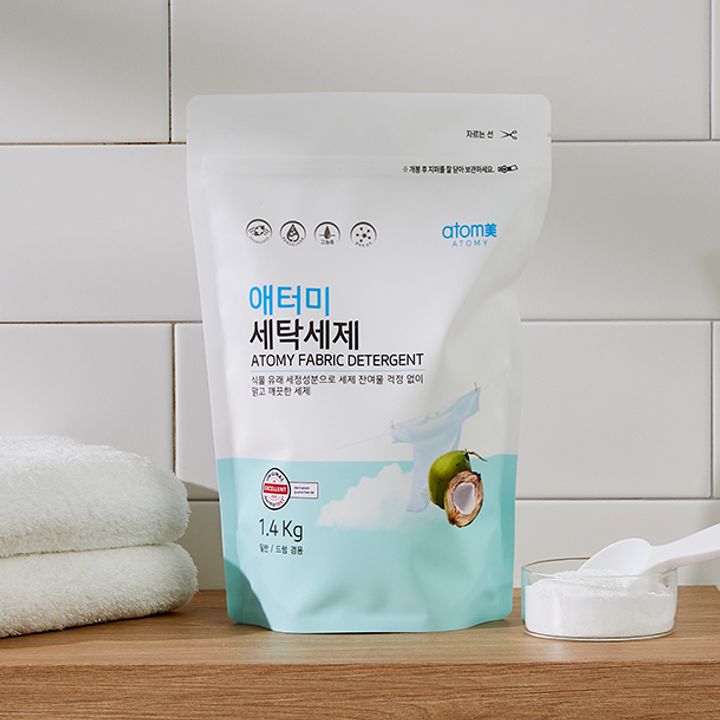
Comparing Atomy to your supermarket brand only works if you compare the same thing. Sticker price lies; cost-per-use tells the truth. This guide gives you a one-page method to compare detergent, cleanser, or toothpaste fairly.
This is for the practical shopper who wants value, not slogans. By the end you will have a repeatable formula and know how to apply it category by category, so “is Atomy cheaper?” becomes a number you calculated rather than a guess.
Why sticker price misleads: different sizes, different doses
Two products almost never come in the same size or ask you to use the same amount. A cheaper-looking bottle can cost more per wash if it is smaller or if you need more of it each time. The price on the shelf answers the wrong question.
Packaging plays on this. A large bottle feels like better value even when the price per unit is worse, and a bright “budget” label suggests savings that the math may not support. None of these visual cues tell you the one thing you need — what a single use actually costs. The rest of this guide replaces those cues with a number you control.
This is exactly why “Atomy is cheap” or “the supermarket is cheaper” arguments go nowhere — they compare tags, not usage. The fix is to normalize both products to the same unit: one use.
Concentration is the usual culprit. A concentrated cleaner or detergent asks for a small dose, so a bottle that costs more can still deliver more washes than a cheaper, more dilute rival. Sticker price hides that entirely. Once you convert to cost per use, the concentrated product’s true value becomes visible — or its lack of value, if the dose needed is larger than the label implies.
The cost-per-use formula: price divided by realistic uses
The method is one line: cost per use = price ÷ number of realistic uses in the pack. Realistic means how you actually use it, not the minimum the label suggests.
For a detergent: price ÷ (pack size ÷ dose per load). For a toothpaste: price ÷ (tube grams ÷ grams per brushing). For a cleanser: price ÷ (bottle ml ÷ ml per wash). Do the same calculation for both products and compare the two per-use numbers directly.
The formula rewards honesty about how you really use a product, which is why it beats any marketing claim. It also travels well: once you have done it for one category, the same three-step pattern — find the price, estimate real uses, divide — applies to almost anything you buy repeatedly. You are building a habit, not just answering one question.
Same conditions only: match dose and water/load settings
A comparison is only fair if the conditions match. Use the same load size, the same water hardness, the same amount of product per use for both brands. If you would use a heaping pump of one and a thin line of the other, you are not comparing the products — you are comparing your habits.
Pull the pack size and any recommended dose from each product’s official page or label so your inputs are accurate. Garbage inputs give garbage answers, and the whole point of this method is to trust the number.
One more fairness rule: measure your own real dose, not the label’s ideal. Most people use more shampoo or detergent than the recommended amount. If that is true for you, apply the same generous dose to both products so neither gets an unfair advantage. The comparison only means something when the two products are tested under identical, honest conditions.
Worked example structure: how to lay out your own numbers
Set it up as a small table so nothing hides. For each product, write down: price, pack size, dose per use, uses per pack (pack size ÷ dose), and cost per use (price ÷ uses).
| Product | Price | Pack size | Dose/use | Uses | Cost/use |
|---|---|---|---|---|---|
| Atomy item | your figure | from label | your dose | calc | calc |
| Supermarket item | your figure | from label | your dose | calc | calc |
Fill it in with the current member price from your country’s Atomy mall and the shelf price of your usual brand. Because prices change and vary by country, gather both on the same day rather than relying on old numbers.
Two small refinements make the table more honest. First, if one product also does a second job — say a shampoo you would otherwise pair with a separate treatment — factor that in, because a slightly pricier all-in-one can still win on total cost. Second, keep the currency figure, not the PV number, in the price cell for the Atomy item; PV is a membership value and has nothing to do with what you pay. With those in place, the two cost-per-use numbers are directly comparable.
Deciding per category: some win, some do not
Run the table for one category at a time. You will likely find Atomy wins some — often concentrated products where a small dose goes far — and loses others where your supermarket brand is genuinely cheaper per use. That mixed result is the honest outcome, and it is more useful than a blanket claim.
Buy Atomy in the categories where its cost per use is lower, and keep your current brand where it is not. The method, not the brand, is what saves you money.
Who this method suits, and who can skip it
This approach suits anyone who buys the same household staples repeatedly and wants to spend a little effort now to save steadily later. For high-frequency items — detergent, toothpaste, shampoo, cleanser — a few minutes of math can change what you buy for years.
You can skip it for one-off or low-cost purchases where the difference per use is trivial; the calculation is not worth the time. And remember the method is neutral by design: it will sometimes tell you to stick with your supermarket brand. If you want a tool that always crowns Atomy, this is not it — which is exactly why it is trustworthy.
How to get it at member price
Where Atomy wins your cost-per-use math, member price is the reason to register before buying. Sign up with sponsor ID 49466217 and use the country guides to start on your country’s site. I will not claim it always wins — I just help you buy the categories where it does. If a step blocks you, message me on Telegram for free English help.
Disclosure: I share my Atomy sponsor ID on this site. If you join with it and later buy products, I may earn a commission under Atomy’s compensation plan. Prices are the same whoever your sponsor is. This is not an official Atomy website.
Sources
- Atomy USA — Shopping mall (pack sizes and member prices) — checked 2026-09-29
- Atomy USA — Return/Exchange/Claim — checked 2026-09-29