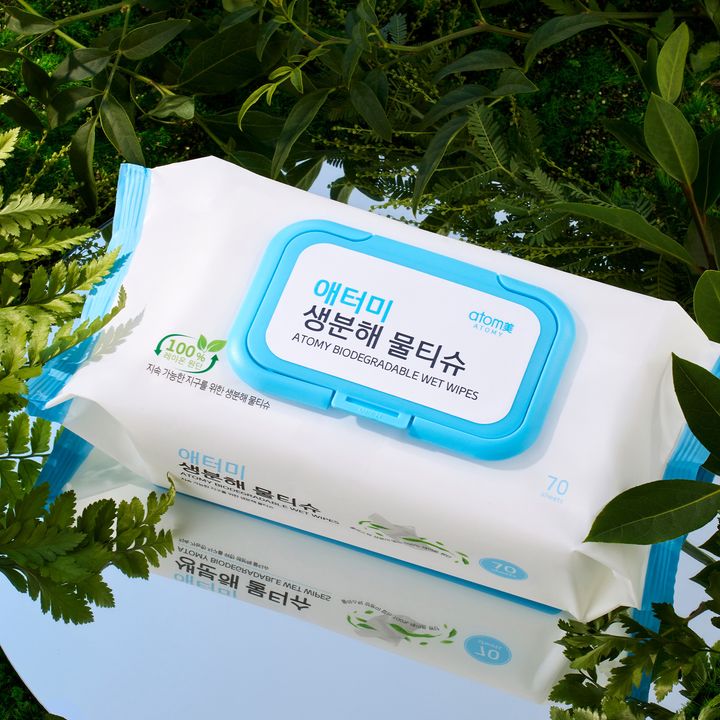
Atomy’s Korean biodegradable-wipe page explicitly warns that flushing the wipes can cause a blockage and directs users to put them in a bin. The word “biodegradable” does not override that disposal instruction.
The page describes rayon fabric and biodegradation under test conditions. That information concerns how material breaks down in an environment over time. It is not evidence that a wipe immediately disperses while travelling through household plumbing.
Why the two claims answer different questions
| Question | Relevant information |
|---|---|
| Can the fabric biodegrade under stated conditions? | The material and biodegradation test |
| Can this used wipe go into the toilet? | The product’s explicit disposal warning |
| Which household waste category applies? | Your local waste-collection guidance |
A longer-term material test cannot be converted into a claim about safe passage through a pipe within seconds.
The US Environmental Protection Agency likewise tells septic-system users to flush only human waste and toilet paper, identifying wet wipes among items not to flush. That is general US septic-system guidance, not individual EPA certification of an Atomy product.
Make the correct disposal route easy
Keep a suitable bin available where the wipes are used, and explain the rule briefly to other household members: these wipes go in the bin.
Follow local instructions for collecting that waste. Do not infer that a biodegradable wipe belongs in paper recycling or can be left outdoors. One environmental characteristic does not establish every disposal route.
Use the product for its labelled task
The Korean listing is eight packs of 70 sheets. That pack count and the rayon description do not turn the product into a medical disinfectant or a cleaner suitable for every surface.
Reseal the pack after use and keep the use precautions available. The practical distinction is simple: material breakdown is one property; toilet disposal is a separate instruction. For this product, the official instruction is not to flush.
Sources and scope
Product warning checked September 7, 2026. EPA guidance was also consulted; its scope is septic-system care.