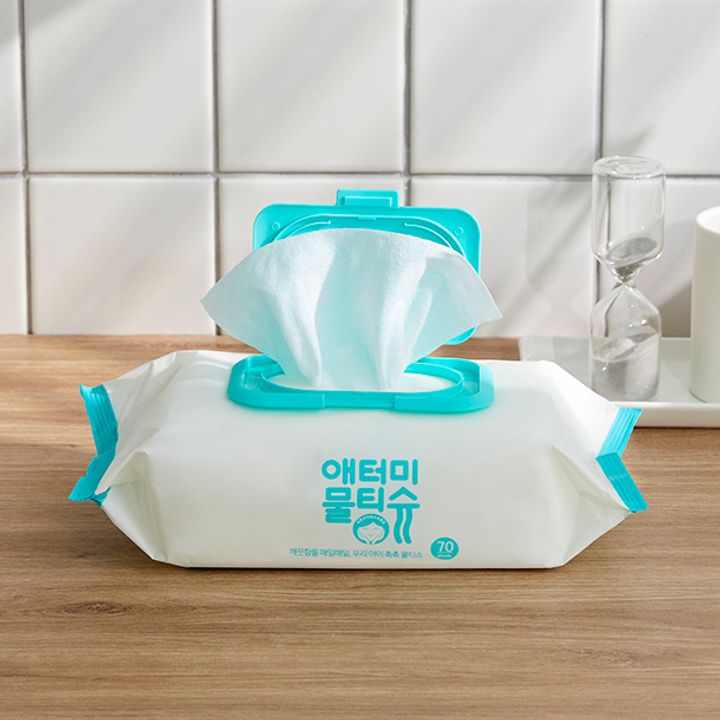
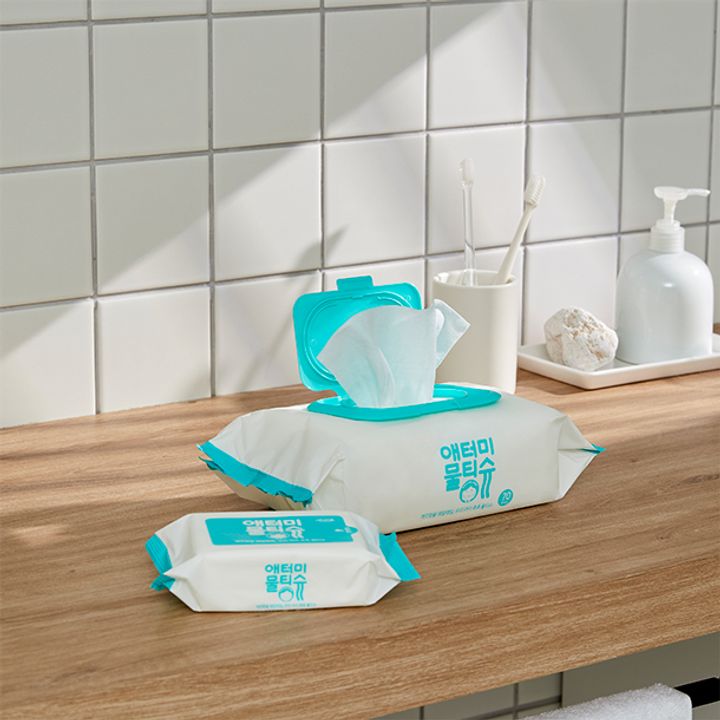
Atomy’s Korean standard wet-wipe listing contains eight packs of 70 sheets. Its portable listing contains three packs of 20 sheets. That gives 560 sheets in the standard order and 60 in the portable order.
A standard pack therefore contains more sheets than the entire three-pack portable order. But total sheets and a useful travelling size are different decisions.
A three-location example
Suppose you use wipes in two places at home and carry one pack outside. Here is an illustrative allocation after buying one order of each format:
| Location or reserve | Allocation |
|---|---|
| Home location A | One 70-sheet pack |
| Home location B | One 70-sheet pack |
| Everyday bag | One 20-sheet pack |
| Unopened home reserve | Six 70-sheet packs |
| Unopened portable reserve | Two 20-sheet packs |
Only three packs need to be in use. This example explains allocation; it is not a recommendation that every household buy both orders.
If you change bags frequently, moving one small pouch between bags may be simpler than leaving an open pack in every bag.
Keep portability attached to the packaging
Taking a few sheets from a large pack into an improvised bag changes the closure and handling conditions. A manufacturer’s portable pack keeps the label, precautions and intended resealing arrangement together.
Use the closure after taking a sheet. The convenience of a small pack disappears if it opens in a bag or you cannot identify what product it contains.
Also match the wipe to its labelled task. A larger quantity of general wet wipes does not turn them into makeup-removal wipes.
Reorder by format, not just total sheets
A house can have plenty of large packs while the everyday bag has none. In that situation, “we need more wipes” is too broad a shopping note.
Identify which location is running low and which format is missing. You can then replenish the portable supply without automatically adding another large household order.
Sources and scope
Korean pack configurations checked September 7, 2026. Allocation and reserve counts above are a worked household example.